
I do Online CBT treatment for Fears & Phobias.
Cognitive Behavior Therapy (CBT) is a research based effective therapy approach to helping fears and phobias.
Mary Cross, MSW RSW CBT therapist. My bio
Types of Fears & Phobias
I help people with any type of fear or phobia. If you don’t see your specific phobia on this list or you are unsure if my approach can help you – please email me or book a free consult and let’s discuss it.
I use CBT to help people with:
- Agoraphobia
- Social phobia
- Fear of driving
- Fear of flying
- Hypochondria
- Emetophobia
- Specific Phobias
My Approach
I use Cognitive Behaviour Therapy (CBT) for fears and phobias in a supportive, gradual way. We start by figuring out where and when the fear or phobia started. Knowing the cause can help it make sense. You will then be offered techniques and tools to manage your fears, calm your thoughts, and calm your body.
When you have practised these tools and they are strong enough to help you manage your emotions, will we move on to exposure therapy (if needed).
Exposure Therapy
EXPOSURE THERAPY is a type of therapy often associated with Cognitive Behavioural Therapy (CBT). Exposure Therapy is used to help people decrease or overcome the overwhelming thoughts, feelings and sensations that happen to them when they are “triggered”.
Triggers
A trigger is something that creates or “triggers” an overwhelming response in you. Triggers are often unique to each person. It could be feeling trapped in a car, plane, meeting etc., open spaces, social situations, needles, vomit, sickness etc.
If needed, I use Exposure Therapy to help people with: Social Anxiety, Generalised Anxiety Disorder (GAD), Fears and Avoidance, Specific Phobias, Panic Disorder, and Obsessive Compulsive Disorder (OCD).
As needed, I use Imaginal Exposure, Interoceptive Exposure and In Vivo Exposure Therapy – meaning, clients gradually expose themselves to the things that they are fearful of. I also believe in the benefits of Progressive Exposure also known as Systematic Desensitization as a gentle approach to exposure.
My Approach
- Psycho-education around the brain and fear.
- Becoming more aware of your triggers.
- Becoming more aware of the thoughts that accompany those triggers.
- Becoming more aware of the actions that accompany those triggers.
- Enhancing your coping methods – various tips, tools, and techniques, to calm, breathe and tolerate distress in both your body and mind.
- Discuss how people you live with or you are close to might be hindering or helping your progress (without knowing it). We can then involve (or not) this person as a Supporter in your process – a parent, sibling, friend, partner or workmate. There are things Supporters should avoid and things they can do to help.
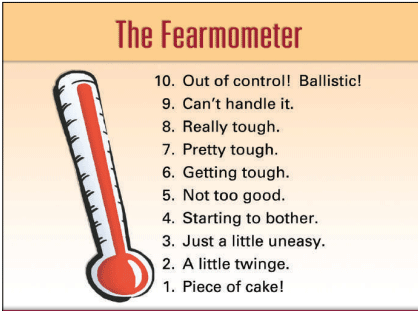
- Learn to use a “Distress Thermometer” to gauge distress level.
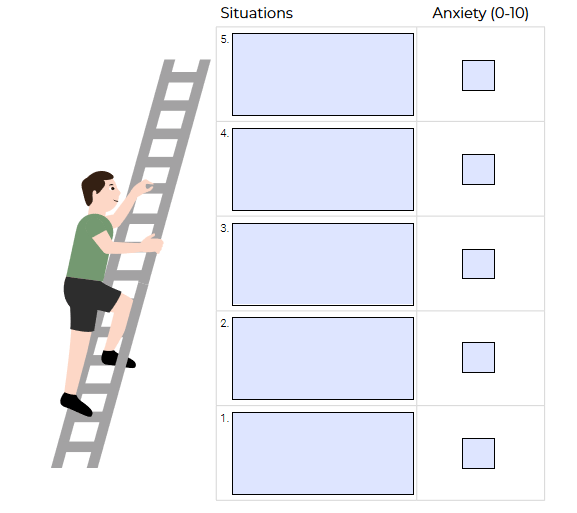
- Prepare a “fear ladder”. Together we outline a stepped plan for exposure therapy starting with something fairly easy and working up to the hardest fear or phobia. Often the first step is Imaginal Exposure – or thinking about a distressing trigger. We only move to a harder level once you are coping with the current level.
- Reinforce coping skills, and create rewards for pushing through each level until you achieve your goal.
- Once you have tamed or conquered your most difficult fear, we discuss a maintenance plan and self-care.
If you are unsure about my experience or would like to discuss your situation with me, feel free to book a Free Consult using the link below.